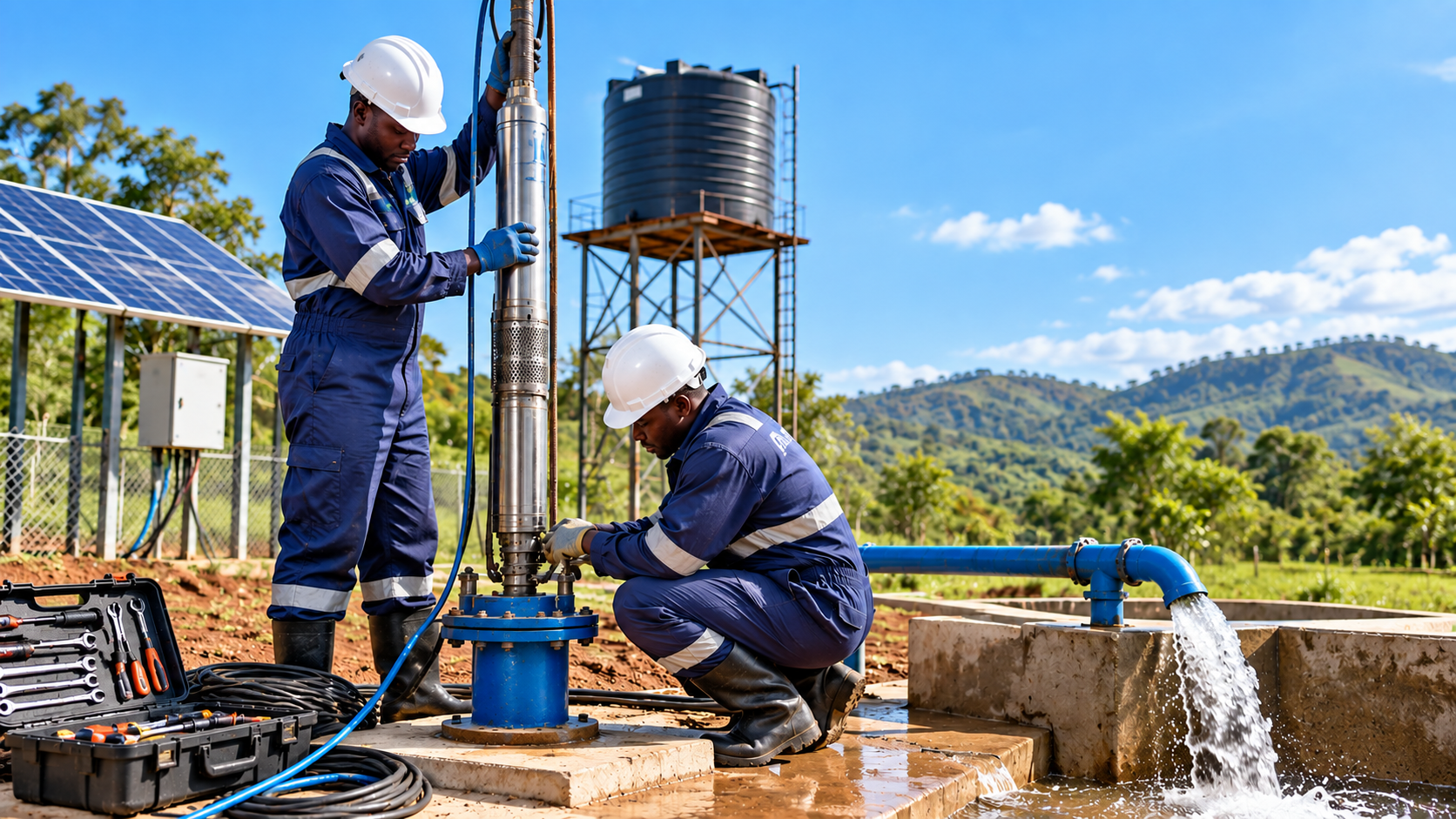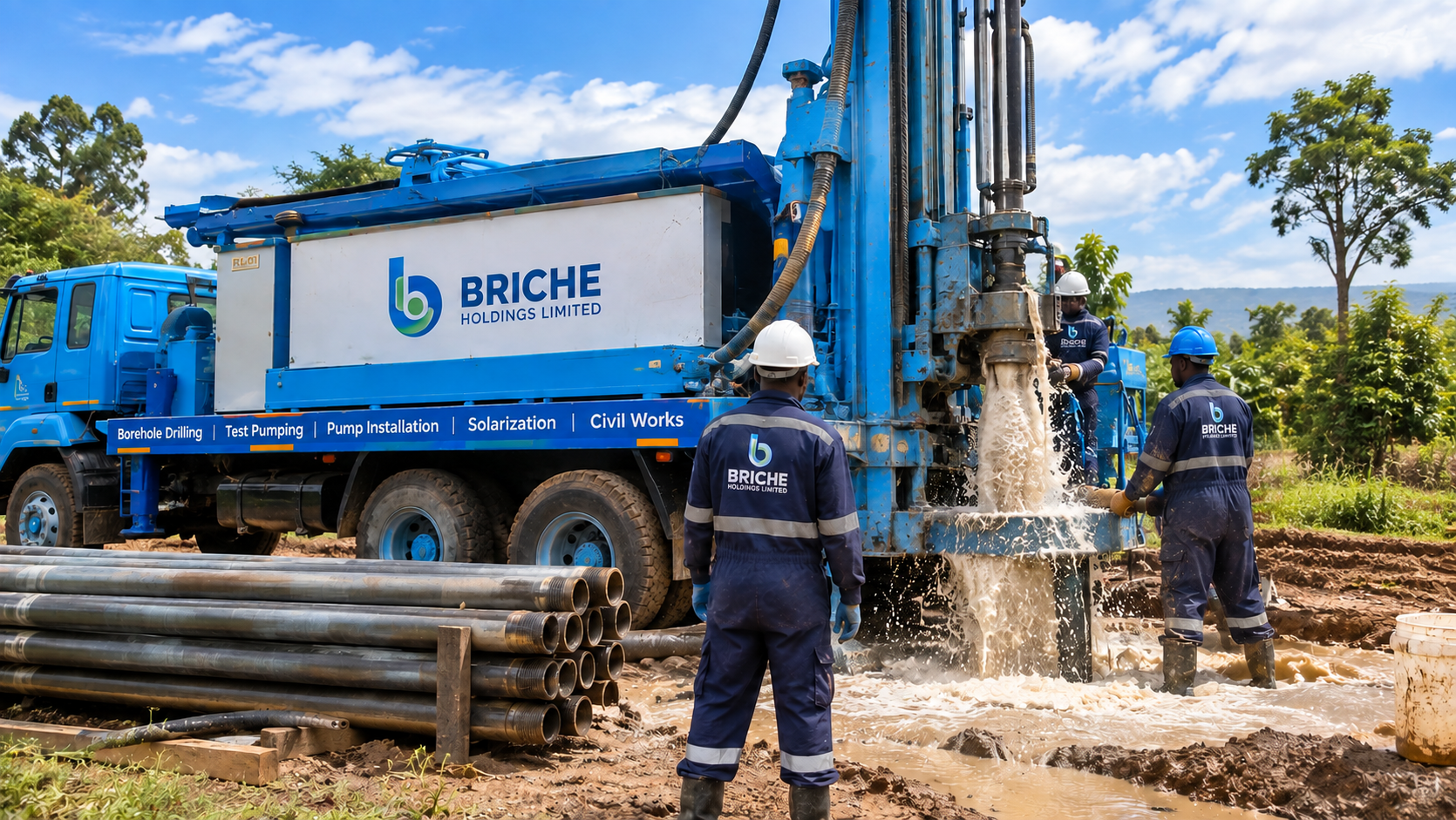
Reliable access to water is important for households, farms, businesses, institutions, and communities across Kenya. However, pumping water can become challenging when electricity is unavailable, unreliable, or expensive. Solar water pumping provides an alternative by using energy from the sun to power water pumps.
When properly designed and installed, a solar pumping system can provide a practical solution for moving water from boreholes, wells, rivers, storage facilities, and other approved water sources.
What Is a Solar Water Pumping System?
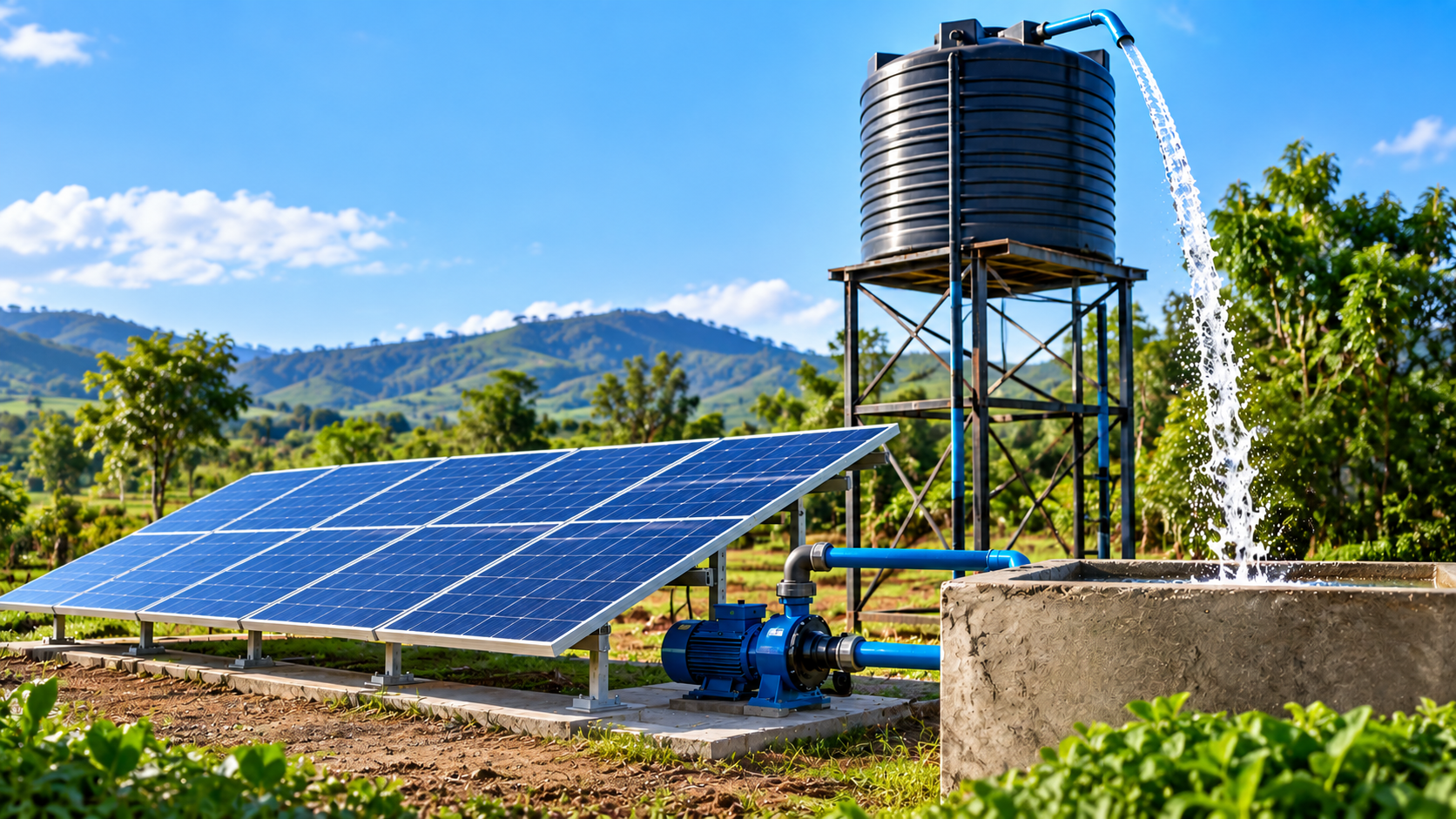
A solar water pumping system uses solar panels to generate electricity for operating a water pump. Depending on the application, the system may pump water from a borehole or another water source into an elevated storage tank. Water can then be distributed through gravity or a pressurised distribution system.
A typical solar water pumping system may include solar panels, a water pump, pump controller or inverter, mounting structures, electrical protection equipment, pipes, valves, and water storage facilities.
How Does Solar Water Pumping Work?
Solar panels capture sunlight and convert it into electrical energy. The generated electricity powers the pump, which moves water from the source to the required destination.
During periods of strong sunlight, the system can pump water directly into storage tanks. The stored water can then be used when solar energy is unavailable. This approach can reduce the need for batteries in some water-pumping applications because water storage effectively provides a form of energy storage.
Where Can Solar Water Pumps Be Used?
Solar pumping systems can be adapted to a wide range of applications, including:
- Residential water supply
- Agricultural irrigation
- Livestock watering
- Schools and institutions
- Commercial properties
- Community water projects
- Remote locations without reliable grid electricity
The appropriate system design depends on factors such as the water source, required flow rate, pumping height, daily water demand, and site conditions.
Key Factors to Consider Before Installation
Before installing a solar water pump, several technical factors should be assessed to ensure the system is appropriately designed.
Water Source
The water source should be identified and assessed. For boreholes, information such as borehole depth, static water level, dynamic water level, and sustainable yield can help determine the appropriate pumping system.
Water Demand
The amount of water required each day is an important consideration. A household may require a significantly different system from a farm, institution, or commercial development. Accurate estimation of daily water demand helps ensure that the system is sized appropriately.
Total Head
The pump must overcome the vertical lifting requirements and friction losses involved in moving water from the source to the storage tank or point of use. Understanding the total head is therefore essential when selecting the appropriate pump.
Solar Resource
The available sunlight at the project location affects the amount of solar energy that can be generated. Solar system sizing should take into account the expected solar resource and operating conditions at the site.
Storage Capacity
Water storage can help ensure that water remains available when sunlight is limited or demand occurs outside pumping hours. Appropriate storage capacity should therefore be considered as part of the overall system design.
Benefits of Solar Water Pumping
Solar water pumping can offer several practical benefits. It can reduce dependence on grid electricity and may be particularly useful in remote areas where extending electrical infrastructure is difficult.
Solar systems can also provide daytime pumping without requiring fuel for a generator. When correctly sized, installed, and maintained, a solar pumping system can support long-term water supply operations.
For agricultural users, solar pumping can provide a useful option for irrigation where conventional power sources are unavailable or costly.
Why Professional System Design Matters
Installing solar panels and a pump is only one part of developing an effective solar water system. The pump, solar array, pipework, controls, storage, and water demand need to work together as an integrated system.
An incorrectly sized system may fail to deliver the required amount of water or may operate inefficiently. A professional assessment can help determine the appropriate pump capacity, solar panel capacity, pipe sizes, storage requirements, and control equipment for the project.
Reliable Water Solutions by Briche Holdings Limited
At Briche Holdings Limited, we provide water infrastructure solutions including pump installation, solar water pumps, borehole drilling, test pumping, water storage, water distribution systems, and related civil works.
Our goal is to develop practical water solutions based on the specific requirements of each project. Whether you need a solar pumping system for a home, farm, institution, commercial property, or community project, proper assessment and system design are important steps toward achieving a reliable water supply.
Planning a Solar Water Pumping Project in Kenya?
If you are planning a solar water pumping project in Kenya, contact Briche Holdings Limited to discuss your requirements and determine the appropriate water pumping solution for your project.